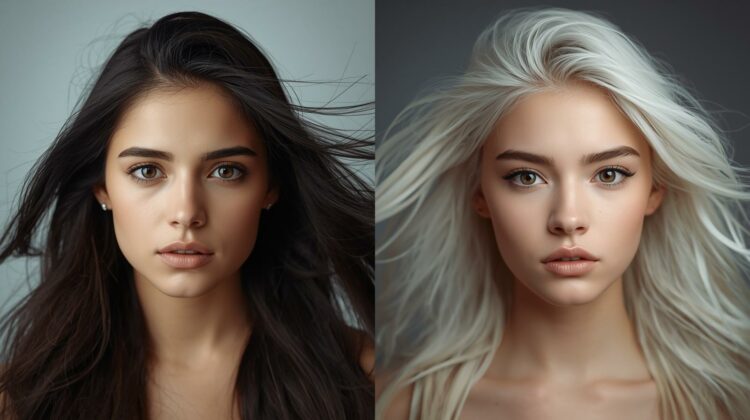
She catches her reflection under unforgiving bathroom light. The fatigue shows first in her hair. A bright silver strand slices through last month’s chestnut dye, louder than the fine lines gathering at the corners of her eyes. She lifts it, twists it between her fingers, tries to tuck it neatly behind her ear. It springs back out, unapologetic. Grey hair never truly hides. It announces itself.
For decades, the response was automatic. Book the appointment. Cover it all. Reset the clock. But something has shifted quietly in salons, mirrors, and minds. More people are stepping away from heavy, full-coverage dye and choosing a softer approach that does not erase grey hair but reframes it. The result often looks fresher, younger, and far more natural than the rigid colour jobs of the past.
This is not a story about giving up. It is about changing tactics.
The Moment Full Coverage Stopped Feeling Right
In the waiting area of a busy salon, the ritual used to be obvious. Clients flipping through magazines, all there for the same reason: roots. The tell-tale dark band at the scalp meant time was up. Colour had become maintenance, not expression.
Today, the atmosphere is different. People still scroll on their phones, but the conversations have changed. Instead of demanding full coverage, they ask for softness, dimension, glow. A stylist walks past with a client whose hair looks alive. It moves. It reflects light. There is no harsh root line, no flat sheet of colour. Most telling of all, there is no sharp chemical smell lingering in the air.
The client smiles at herself in the mirror with ease. Her hair does not look dyed in the old sense. It looks considered.
Why the Old Formula Started to Fail
For years, grey hair was treated as a defect to eliminate. Permanent dye promised control and certainty. But over time, many began to notice an uncomfortable truth. Flat, opaque colour often made faces look harder. It pulled attention to fine lines, shadows, and texture. Instead of restoring youth, it sometimes exaggerated age.
A single, dark shade offers no visual movement. On mature skin, that lack of dimension can feel unforgiving. Light has nowhere to bounce. Every regrowth line becomes more dramatic, more urgent. Hair stops feeling like part of you and starts feeling like a problem to manage.
As tastes evolved, so did expectations. People wanted hair that looked believable, not corrected.
The Rise of Working With Grey Instead of Against It
Colourists began asking different questions. What if grey hair was not the enemy? What if it could be integrated, softened, even elevated?
Rather than coating every strand, they started weaving colour around the silver already there. This approach created depth instead of denial. Grey became part of the design, not a flaw to hide.
The surprise for many clients was immediate. Strategically blended grey often looks younger than forcing hair into a uniform, dark block. The face appears lighter. Features soften. The overall effect feels effortless, even when the technique behind it is highly skilled.
A Shift You Can Hear in the Salon
Step into a city salon on a Saturday and listen closely. You will hear phrases like soft blend, veil of colour, luminous finish. You will hear far less about full coverage.
In London, one stylist joked that root-touch-up loyalists had nearly vanished. In their place are clients asking for hair that grows out gracefully, hair that does not demand constant vigilance.
A lawyer in her early fifties shared her turning point. She had dyed her hair jet black every three weeks since her late thirties. One evening, her teenage daughter looked at her roots and said, with brutal honesty, that her hair looked like a Lego piece when it grew out. Solid. Obvious. Artificial.
The comment stung, but it worked. She booked a grey-blending appointment instead of her usual touch-up. Three hours later, her hair had transformed into a smoky, dimensional brown. Her natural silver was woven through like intentional highlights.
The following week, colleagues asked if she had changed her skincare routine. No one guessed that she had actually used less colour.
How Less Colour Can Make You Look More Rested
This is the quiet paradox driving the trend. Removing heaviness often restores freshness.
Opaque dye absorbs light. Translucent techniques reflect it. When light moves through the hair, it softens the overall impression of the face. Angles appear gentler. Shadows lift slightly. The effect is subtle but powerful.
There is also a psychological shift. When you stop chasing a perfectly sharp root line, you stop feeling like you are constantly behind. Hair growth no longer feels like failure. Instead of being overdue for colour, your hair is simply evolving.
That sense of ease shows.
The Techniques Redefining Grey Hair Today
Modern colour trends no longer promise complete coverage. They promise refinement.
Think of it like makeup. Heavy foundation hides everything but can look mask-like. A sheer skin tint evens tone while letting real skin show through. Hair colour has taken the same path.
Grey Blending Explained
Grey blending is exactly what it sounds like. Instead of applying one solid shade, the colourist builds a palette.
Lowlights are added close to the natural base to anchor the colour. Lighter pieces are placed strategically, often around the face and crown. Existing grey strands are left visible but softened by what surrounds them.
The result is movement. Grey no longer interrupts the colour story. It belongs in it.
The Role of Translucent Glosses
A sheer gloss or toner often follows the blending process. Unlike permanent dye, it sits lightly on the hair, enhancing shine and refining tone without heaviness.
These glosses fade gradually. There is no harsh regrowth line, no sudden moment when colour looks wrong. Grey remains visible, but it looks satin-soft rather than coarse or dull.
In a small Paris salon, a woman in her sixties sat nervously in the chair. Nearly seventy percent of her hair was grey, yet she had been maintaining a dense chocolate brown for years. The root line caused her monthly stress. She felt stuck between two ages, neither of which felt authentic.
The stylist suggested abandoning full coverage. He lifted selected strands, added cool beige lowlights, and finished with a pearly gloss that suited her skin tone. He left some natural silver at the temples untouched, allowing it to act like natural highlights.
When she looked in the mirror, she paused. Then she said softly that she looked like herself from ten years ago. Not transformed. Recognised.
Why People Rarely Go Back Once They Switch
Industry reports show a clear pattern. Requests for grey-blending services have surged, especially among those in their forties, fifties, and sixties. At the same time, single-tone permanent dye appointments are declining.
Once people experience the freedom of softer colour, they rarely return to the old cycle. Emergency root fixes disappear. The anxiety around visible regrowth fades. Hair becomes something you live with, not something you fight.
Socially, the effect is noticeable but hard to pinpoint. When hair does not shout dyed, attention shifts elsewhere. Eyes look brighter. Expressions seem more open. Energy becomes the focal point, not maintenance.
How to Transition Away From Heavy Dye Without Panic
Stepping back from full coverage does not mean jumping straight into stark silver. The most successful transitions are gradual and intentional.
Start by Reducing Contrast
One effective approach is to lighten slightly. Instead of matching your darkest natural colour, choose a shade one or two levels softer. Pair it with fine highlights, especially around the face. That subtle brightness acts like a natural light reflector.
The root line becomes less dramatic. Growth looks intentional rather than neglected.
Focus on Texture, Not Just Colour
Many people think they dislike grey hair when what they actually dislike is how it feels. Grey strands can be coarser and drier if not cared for properly.
Richer conditioners, regular masks, and gentle cleansing can dramatically improve texture. Occasional toning products can keep silver from looking yellow or dull. When grey hair feels healthy, it automatically looks more refined.
Expect an Uneven Phase and Plan for It
Fear of the awkward grow-out stage stops many people from trying. That phase is real, but it does not have to be chaotic.
A skilled stylist will map out stages. First, soften the root. Then, gradually lighten the base. Finally, refine the tone as more natural grey comes through. Each appointment has a purpose beyond simple coverage.
Avoid Going Too Dark
One of the most common mistakes is clinging to very dark shades. Deep black or heavy brown can magnify every line and shadow on mature skin.
Softer, lighter tones blur edges and create harmony. Even minimal face-framing layers or styling can enhance the effect without adding more colour.
The Emotional Side of Letting Grey Exist
Underneath the technical choices lies something deeper. Grey hair has long been loaded with meaning. Age. Decline. Invisibility.
Many people realise, mid-transition, that they never truly hated their grey hair. They hated what they were told it symbolised.
When grey is softened rather than erased, that narrative changes. Hair stops signalling an age category and starts expressing individuality again.
One woman summed it up simply. Once her colour was softened, she felt like herself again. Not younger. Just more honest.
What to Discuss Before Booking a Grey-Blending Appointment
A thoughtful conversation matters more than a single technique.
Talk about how strong the contrast is between your natural hair and your current colour. Discuss whether you prefer cooler tones like ash and pearl or warmer ones like honey and caramel. Be honest about how often you want to visit the salon. Low maintenance often means slower transitions, and that is usually a good thing.
Most importantly, ask whether your stylist considers shine, texture, and movement, not just coverage. Those elements are what make hair look alive.
Redefining Age One Strand at a Time
Moving away from harsh dye is not just a beauty trend. It reflects a broader shift in how people view ageing itself.
When grey hair is treated as a defect, every millimetre of regrowth feels like a loss of control. When it is treated as raw material, it becomes something to shape and refine.
What most people want is not the complete absence of grey. They want to recognise themselves in the mirror. Sometimes that means embracing silver fully. Sometimes it means layering it with beige, taupe, or smoky blonde so it complements skin and eyes.
This movement grows quietly. In bathroom mirrors late at night. In salon chairs where someone decides to try something softer. In conversations where a colleague admits she stopped fighting her roots and looks better for it.