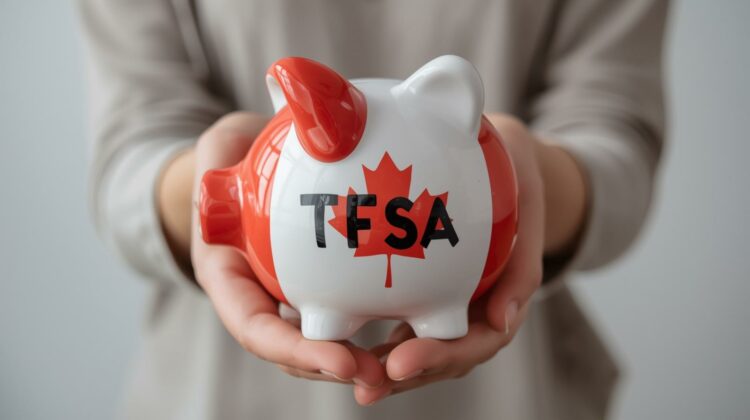
The Canada Revenue Agency has officially announced the Tax-Free Savings Account contribution limit for the 2026 tax year. This annual update matters to millions of Canadians because the TFSA remains one of the most powerful and flexible savings tools available. With inflation still affecting everyday costs and interest rates reshaping investment strategies, understanding the 2026 TFSA limit is essential for smart financial planning.
This article explains the new contribution limit in detail, how it compares to previous years, who is eligible, how unused room works, and how Canadians can use their TFSA more effectively in 2026.
The Official TFSA Contribution Limit for 2026
The CRA has set the TFSA contribution limit for 2026 at $7,000.
This means eligible Canadians can contribute up to $7,000 into their Tax-Free Savings Account during the 2026 calendar year. Any investment income earned inside the account, including interest, dividends, and capital gains, remains completely tax free.
The limit applies per individual, not per account. Whether you have one TFSA or multiple TFSAs across different financial institutions, your total contributions in 2026 cannot exceed $7,000 plus any unused contribution room carried forward from previous years.
Why the TFSA Limit Did Not Increase in 2026
TFSA limits are indexed to inflation and rounded to the nearest $500. While inflation has fluctuated over recent years, the increase for 2026 did not meet the threshold required to trigger a higher annual limit.
As a result, the CRA maintained the same $7,000 limit that applied in 2025. This stability gives savers predictability, even though it may feel modest compared to rising costs in housing, groceries, and utilities.
Total Lifetime TFSA Contribution Room for 2026
For Canadians who have been eligible for the TFSA since its introduction in 2009 and have never contributed, the total cumulative contribution room in 2026 is $108,500.
This figure represents the sum of all annual limits from 2009 through 2026. It is important to note that most people will not have this full amount available, as it depends on when you became eligible and how much you have already contributed over the years.
Eligibility begins when you turn 18 and have a valid Social Insurance Number. If you became eligible after 2009, your personal lifetime limit will be lower.
Who Is Eligible to Contribute to a TFSA in 2026
You are eligible to contribute to a TFSA in 2026 if:
- You are a Canadian resident for tax purposes
- You are at least 18 years old
- You have a valid Social Insurance Number
There is no upper age limit. Seniors can continue contributing to their TFSA well into retirement, making it a valuable complement to CPP, OAS, and other retirement income sources.
How Unused TFSA Contribution Room Works
One of the most powerful features of the TFSA is that unused contribution room carries forward indefinitely.
If you did not use your full contribution limit in previous years, that unused amount adds to your available room in 2026. For example, if you had $15,000 of unused room at the end of 2025, you can contribute up to $22,000 in 2026, combining the carried-forward amount with the new $7,000 limit.
This flexibility makes the TFSA especially useful for people with irregular income, self-employed Canadians, or those who paused investing earlier in life.
TFSA Withdrawals and Re-Contributions in 2026
Withdrawals from a TFSA are tax free, regardless of the amount or purpose. This includes withdrawals for emergencies, home purchases, education, or everyday expenses.
When you withdraw funds, the withdrawn amount is added back to your contribution room, but only in the following calendar year. Withdrawals made in 2026 will restore contribution room starting January 1, 2027.
Re-contributing withdrawn funds in the same year without sufficient room can trigger overcontribution penalties, so careful tracking is essential.
TFSA Overcontribution Rules and Penalties
Contributing more than your available TFSA room results in a penalty tax of 1 percent per month on the excess amount until it is corrected.
This penalty applies even if the overcontribution was accidental. Common causes include misunderstanding available room, contributing after a withdrawal in the same year, or holding multiple TFSAs without tracking totals.
The CRA expects account holders to monitor their own limits, even though financial institutions report contributions annually.
What You Can Hold Inside a TFSA
A TFSA is not an investment itself. It is a registered account that can hold a wide range of qualified investments, including:
- Savings accounts
- Guaranteed investment certificates
- Mutual funds
- Exchange-traded funds
- Publicly traded stocks
- Certain bonds
Because all growth is tax free, many Canadians use their TFSA for higher-growth investments that would otherwise generate taxable capital gains or dividends in a non-registered account.
TFSA vs RRSP: How the 2026 Limit Fits Your Strategy
While RRSP contribution limits depend on income, the TFSA limit is the same for everyone. This makes the TFSA particularly valuable for:
- Lower- and middle-income earners
- Seniors who want tax-free withdrawals
- Canadians expecting higher future tax rates
- People receiving income-tested benefits
Unlike RRSP withdrawals, TFSA withdrawals do not count as taxable income and do not reduce benefits such as GIS, OAS clawbacks, or other income-tested programs.
TFSA Benefits for Seniors in 2026
For retirees, the TFSA remains a critical planning tool. Income withdrawn from a TFSA does not affect eligibility for federal or provincial benefits.
Seniors often use TFSAs to hold emergency funds, supplement monthly income, or preserve capital for later years without triggering tax consequences.
With the 2026 limit confirmed at $7,000, seniors who still have room can continue building tax-free savings even after leaving the workforce.
TFSA Planning Tips for 2026
To make the most of your TFSA in 2026:
- Confirm your available contribution room before adding funds
- Prioritize TFSA contributions before non-registered investing
- Consider long-term growth investments if your timeline allows
- Avoid short-term trading that may attract CRA scrutiny
- Keep personal records of contributions and withdrawals
Strategic use of the TFSA can significantly improve after-tax wealth over time.
Common TFSA Mistakes to Avoid
Many Canadians miss out on TFSA benefits due to avoidable errors. These include:
- Assuming withdrawals create immediate new room
- Ignoring unused contribution room from past years
- Overcontributing across multiple accounts
- Holding cash only and missing long-term growth
- Treating the TFSA as a day-trading account
Understanding the rules helps protect the tax-free status of your investments.
What the 2026 TFSA Limit Means for Canadians
The confirmed $7,000 TFSA contribution limit for 2026 reinforces the account’s role as a cornerstone of personal finance in Canada. While the limit did not increase this year, the long-term value of tax-free growth remains substantial.
Whether you are just starting out, building wealth, or managing retirement income, the TFSA continues to offer unmatched flexibility, simplicity, and tax efficiency.
Staying informed about annual limits and using your available room wisely can make a meaningful difference in your financial future.