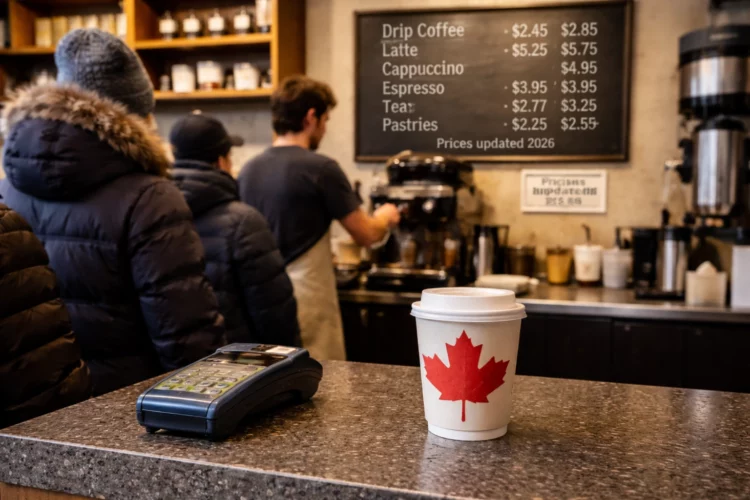
If your day starts with a coffee on the way to work, you’ve probably noticed the price creeping up. In 2026, that trend is expected to continue. Coffee has become one of the biggest contributors to food inflation in Canada, and the pressure is coming from multiple directions at the same time: global supply issues, trade costs, and restaurant price increases that are pushing up the cost of everything from a simple drip coffee to specialty espresso drinks.
This isn’t just a “coffee shop problem.” It’s showing up at grocery stores, drive-thrus, and restaurants, and it affects daily budgets more than people realize because coffee is one of those small purchases that happens repeatedly.
Below is a detailed look at why coffee is getting more expensive in Canada, what’s likely to happen next in 2026, and what practical changes can help you spend less without giving up your caffeine routine.
Coffee Prices Are Rising Faster Than Most Grocery Items
Coffee isn’t rising slowly like many other staples. It has been climbing at a rate that stands out even in a high-cost environment.
Coffee Jumped Over 30 Percent Year Over Year
Recent Consumer Price Index data showed coffee prices rising sharply compared to the same time the year before. That kind of increase is huge for a product that many households buy weekly, and for many workers buy daily.
When coffee prices rise this quickly, it creates a ripple effect across the entire food market, because it shows up in grocery bills and restaurant spending at the same time.
Food Inflation Is Still Pressuring Canadian Households
Canada’s overall inflation rate has moved around, but food inflation remains stubborn. Even when monthly grocery price changes look stable, the year-over-year increase can still be significant.
This matters because it means coffee is rising inside a broader pattern of higher food costs, not in isolation.
Why Coffee Is Getting More Expensive in 2026
Coffee prices are influenced by a long supply chain that starts far outside Canada. The cost you pay at the counter is the end result of weather, harvest conditions, shipping, currency movements, and retailer decisions.
Poor Growing Seasons and Climate Disruptions
Coffee is a crop that depends heavily on stable weather patterns. When major producing regions experience poor growing seasons, lower yields reduce supply. Less supply almost always leads to higher prices, especially when demand stays strong.
Even one bad season can affect pricing for months because coffee is traded globally and contracts are priced ahead of time.
Trade Costs and Tariff Effects Take Time to Fade
Coffee prices can also rise because of tariffs and trade-related costs. Even if certain counter-tariffs are reduced or removed, prices do not instantly fall at the store level.
That delay happens for a few reasons:
Retailers may still be selling inventory purchased at higher costs
Coffee has a longer shelf life than many foods, so supply moves more slowly
Pricing contracts and distribution deals are often locked in for months
This is why Canadians may not feel relief right away even if trade conditions improve.
The Canadian Dollar Can Make Coffee More Expensive
Coffee is typically purchased in U.S. dollars on global markets. When the Canadian dollar weakens, Canadian importers pay more in Canadian currency even if the global coffee price stays the same.
That cost often gets passed down to roasters, grocery stores, and coffee shops.
Higher Operating Costs for Coffee Shops
Even if beans stayed the same price, cafés would still face pressure because their costs have increased across the board, including:
Rent and leasing costs
Wages and staffing shortages
Milk, cream, sugar, and packaging
Equipment maintenance and repairs
Utilities and insurance
For restaurants and cafés, coffee is also tied to customer expectations. When costs rise, businesses may increase prices gradually rather than all at once, which makes the increases feel never-ending.
Restaurant Coffee Is Rising Alongside Food Inflation
Many Canadians don’t just buy coffee beans. They buy prepared coffee, which is affected by restaurant inflation.
Restaurant Food Prices Are Climbing Faster Than Grocery Food
Restaurant pricing has been one of the biggest contributors to inflation growth. When restaurant prices rise, coffee becomes more expensive not only because of beans, but because everything involved in serving it costs more.
A basic coffee purchase includes more than the drink itself. It includes labour, the cup, the lid, the store lease, and the time it takes to serve you.
Why Coffee Shop Prices Feel Worse Than Grocery Prices
Coffee bought outside the home is usually a daily habit. Even a small price increase hits harder when it happens five or six times a week.
For example, an extra 25 cents per coffee does not sound like much, but over a year it becomes a noticeable expense, especially for commuters and office workers.
Why Prices May Not Drop Soon, Even If Conditions Improve
Many people assume prices should fall when inflation slows or tariffs ease. In reality, coffee prices are slow to come back down.
Coffee Moves Through the Supply Chain Slowly
Coffee is not like fresh produce that turns over rapidly. It can sit in warehouses, distribution centres, and store inventory for long periods. That means the price you pay today may reflect costs from months ago.
Businesses Rarely Roll Back Prices Quickly
Once consumers get used to a higher price, companies often hold that price unless competition forces them to reduce it. Instead of lowering prices, businesses are more likely to:
Offer smaller discounts
Push loyalty rewards
Promote bundle deals
Introduce smaller sizes at similar prices
This is why coffee price relief can take a long time to show up, even when global conditions improve.
Suppliers Are Diversifying Away From Single Markets
Food suppliers and manufacturers are also exploring new trade routes and partners outside traditional markets. While this can improve stability long term, it can keep costs elevated in the short term because shifting supply chains is expensive.
Real-World Impact: What Canadians Will Notice in 2026
Coffee price increases don’t always appear as one big jump. They often show up as multiple smaller changes.
Higher Prices at Drive-Thrus and Chains
Major chains adjust pricing carefully, but they still raise prices when costs rise. Canadians may notice:
A small increase on basic coffee
Bigger increases on specialty drinks
Higher costs for add-ons like espresso shots and flavoured syrups
Grocery Store Coffee May Shrink or Get Pricier
At the grocery store, coffee inflation can appear in two ways:
The same bag becomes more expensive
The bag gets smaller but stays close to the old price
This is especially common with products that have strong brand loyalty.
More Premium Pricing for Specialty Beans
Specialty coffee is more sensitive to supply issues because it depends on specific growing regions and quality standards. If supply tightens, premium beans can jump in price faster than basic blends.
How Canadians Can Save Money on Coffee Without Giving It Up
You don’t need to quit coffee to protect your budget. A few small changes can cut costs significantly over time.
Make Café Coffee an Occasional Habit Instead of Daily
If you currently buy coffee every weekday, reducing it to two or three days a week can cut spending quickly without changing your routine completely.
Use Grocery Coffee for the “Routine” Days
Save café coffee for:
Days you need a boost
Meetings or social catch-ups
Long commutes
Weekend treats
Switch to Brewing at Home, Even Part-Time
Home brewing has a much lower cost per cup. Even a simple setup can deliver strong results.
Easy Home Options That Save Money
Drip coffee maker
French press
Pour-over
Single-serve machine
The goal is not to become a coffee expert. It’s to lower the cost per cup.
Watch for Sales and Buy Larger Bags When It Makes Sense
Coffee prices may stay high, but sales still happen. Buying larger bags can reduce the cost per gram, especially if you store it properly.
Store Coffee Correctly to Avoid Waste
Keep coffee sealed
Store in a cool, dry place
Avoid moisture and direct sunlight
Wasting coffee is the same as paying extra.
Rethink Add-Ons That Inflate the Price
The most expensive coffee orders often include extras. If prices rise again in 2026, trimming add-ons can help.
Examples include:
Extra espresso shots
Flavoured syrups
Premium milk upgrades
Whipped toppings
Even reducing one add-on can bring the total down.
What Coffee Prices in Canada Could Look Like by Late 2026
It is difficult to predict exact prices, but the direction is clear: coffee costs are unlikely to fall quickly, and they may continue to rise gradually through 2026.
The Most Likely Scenario
Slow, steady increases at cafés and grocery stores
Short-term spikes if global supply issues worsen
Limited relief even if tariffs ease further
The Wildcard Factors
Weather disruptions in major coffee regions
Oil and shipping cost changes
Canadian dollar fluctuations
New trade restrictions or supply chain disruptions
Coffee is a global product, and global instability tends to show up in the price of your morning cup.
Final Takeaway: Coffee Is Becoming a Bigger Budget Item in 2026
Coffee in Canada is no longer a small, forgettable expense. With prices rising sharply year over year and restaurant costs still climbing, the average Canadian is likely to pay more for coffee again in 2026.
The good news is that coffee is also one of the easiest parts of your routine to control. You can cut spending without sacrificing the habit by mixing home brewing with occasional café visits, watching sales, and reducing costly add-ons.
In a year where food prices remain a concern, managing coffee costs is one of the simplest ways to protect your monthly budget while still enjoying the daily ritual.